I'd barely gotten back from Tenerife when the doorbell rang. And then again, immediately. The DHL driver was clearly not the patient type. Neither am I, to be fair, but I'd just survived a long-haul flight.
Read More ›
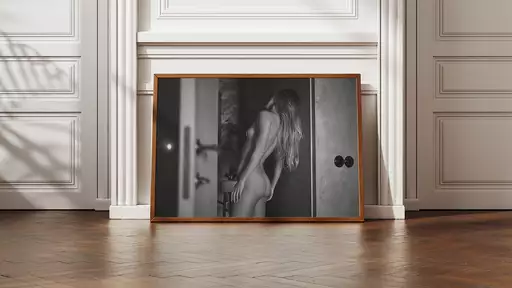
Every few months, there's this moment when I restock my art shop. I sit in front of my archive, scrolling through thousands of images, and it hits me again: a good photograph isn't automatically a good wall print.
A fascinating headline that hasn't let me go since I read about the Beatles. Imagine: a single day in the studio and the entire first album is completed. Pure intuition, pure feeling — and a result that made music history.
It's just past midnight and I'm sitting in bed with my MacBook. Sounds like one of those moments where you catch yourself thinking, doesn't it? The thing is, I'm not really the type for late-night brooding. But sometimes, it just has to come out. This vague feeling that the world is slipping through my fingers. As if someone set the playback speed to 1.5x while I'm still trying to keep up at normal speed.
International editions of Vogue and Elle were piled on my desk. For hours, I studied the photo spreads, searching for the secret of their fascination. What makes these photos so magnetic, so irresistibly alive?
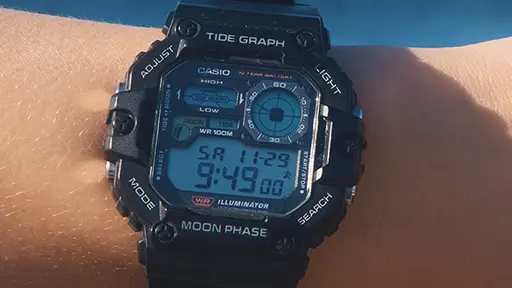
Sometimes you buy a watch because it looks like a James Bond gadget from the eighties. Black plastic, lots of tiny buttons, mysterious symbols on the display — and then that one function that makes you giggle like a twelve-year-old: tide prediction. After a trip to El Cotillo, I know: It's about two hours off, but for a rough overview, it's perfectly fine.
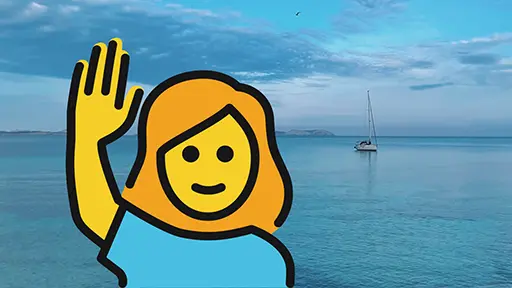
Digital communication certainly has its pitfalls. This morning I received a message from a well-known model — if you can even call it a message. A single emoji, that little figure with a raised arm, like an eager student just before the bell rings for break. The digital gesture was probably meant to say: "Hey, I want to go to Ibiza too!"
As a kid, I had those "Where's Waldo?" style illustration books. I could disappear into them for hours, hunting for details, inventing stories between the drawn figures. Maybe I should have loved AI composites. But I don't.
As a photographer, I dream of large images. Of photos that can breathe. But then the layout department chimes in, and suddenly my photographic masterpiece must be forced into a corset that doesn't match its natural form at all.
Recently my wife repeated that sentence she likes to say often: "Find yourself a hobby." I had to smile, because how do you explain to someone that it's not so simple when you've turned your hobby into your profession? Photography isn't just my job, it's my passion, my constant companion, essentially my second wife — though perhaps I shouldn't phrase it quite like that.
Here we go again. A new year has begun, and here I sit with my coffee, scrolling through my calendar. A few shoots are already scheduled. February: Tenerife. May: possibly Paris. But in between? Gaps. Large, white gaps waiting to be filled.
Sometimes I have to look twice when I realize how working with models has changed in recent years. Not because of new camera technology or sophisticated lighting, but because of something much more fundamental: the way the younger generation lives relationships and earns money with them.
Sometimes the strangest things happen when you're just sitting there, staring into space. Like yesterday, when I was slouching in my living room, looking at this picture on the wall. Not particularly attentively, more like the way you look at things that have been hanging there forever. And suddenly this thought hit me like a small electric shock: Is this actually really mine?
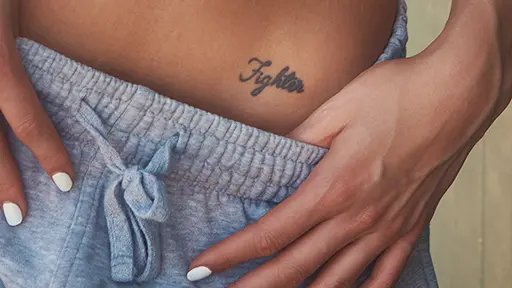
Today I'm getting personal. I rarely share such stories, but this particular photoshoot deserves an exception. It's about Julene, the woman with the "Fighter" tattoo on her hip bone.
For days, I've been preoccupied with a message. "The contrasts are wrong," someone writes to me. Just like that. Four words that have me pondering. Not because I doubt my work, but because they say so much about our understanding of art.
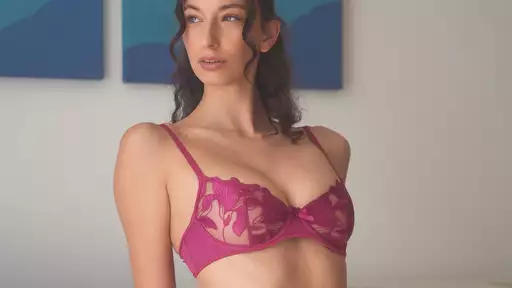
It's Petra's birthday. I have a beautiful photo of her, taken just a few weeks ago during our shoot in Fuerteventura. She's wearing lingerie, kneeling on a sofa, looking toward the window. No nipple, no provocative pose, nothing you wouldn't see in any perfume shop display or at any train station newsstand. So I post the image on Instagram with the caption "Happy Birthday" and think nothing of it.
Yesterday, I caught myself clicking on a green area with my mouse. Again and again. Not because I'd discovered some new image editing trend, but because I wanted to get to the bottom of my reaction time. The result? Sobering. 310 milliseconds on average, with an upward tendency.
8 AM. After two days of photo production, I'm boarding a flight home from Ibiza, looking forward to seeing my wife. But first, I need to cry. It just breaks out of me. Thankfully, I have the entire row to myself. Why me? Why won't it stop?
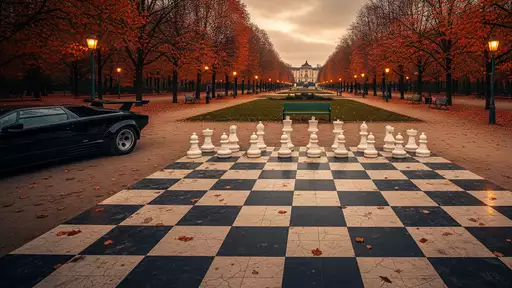
Recently, I stared at an image for ten minutes. Ten minutes in which I dissected every detail like a pathologist during an autopsy: The rows of trees with their accurate autumn colors. The weathered chessboard with cracked joints between the tiles. The warm yellow street lamps and their light reflections on the chessboard to the right. And the extremely flat, black Lamborghini Countach at the left edge of the frame. I couldn't tell whether it was a photo or AI.
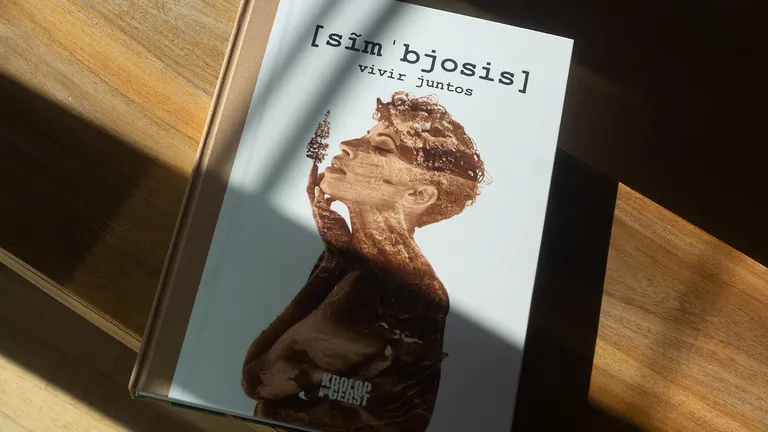
You know how it is with art. It really belongs to everyone. At least that was always my modest conviction when I sent my photo books out into the world. Limited editions, yes, but not to create artificial scarcity — rather because it just felt right. Like a good conversation — it eventually comes to an end, and that's exactly what makes it valuable.
Today I stumbled across a study that particularly interested me as a photographer: researchers have been investigating why men have different preferences for female body parts. Some are Team Breasts, others Team Butt. Apparently this is biologically hardwired, and I see evidence of it every day in my work.
There are those people who wake up one day and realize: This isn't my life. For Nausicaa Yami, it happened of all times during a global pandemic, when the world stood still and she suddenly had time to think. Eight years she'd worked as a pastry chef. Cake designer — a respectable profession, her parents would say. Except lockdown closed that chapter.
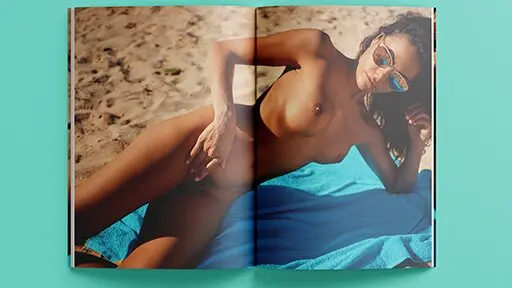
Back from Fuerteventura, I'm sitting at my desk signing the last copies of my Mellow photo book. Remove the wrapping, flip through, autograph on page 5, done.
I'm driving against traffic on social media. Never spent much time there, don't really get the hype. Looking at other people's photos just makes me jealous, makes me feel small as a photographer. So the platforms aren't good for me.
Subscribe to RSS Feed



 Subscribe to RSS Feed