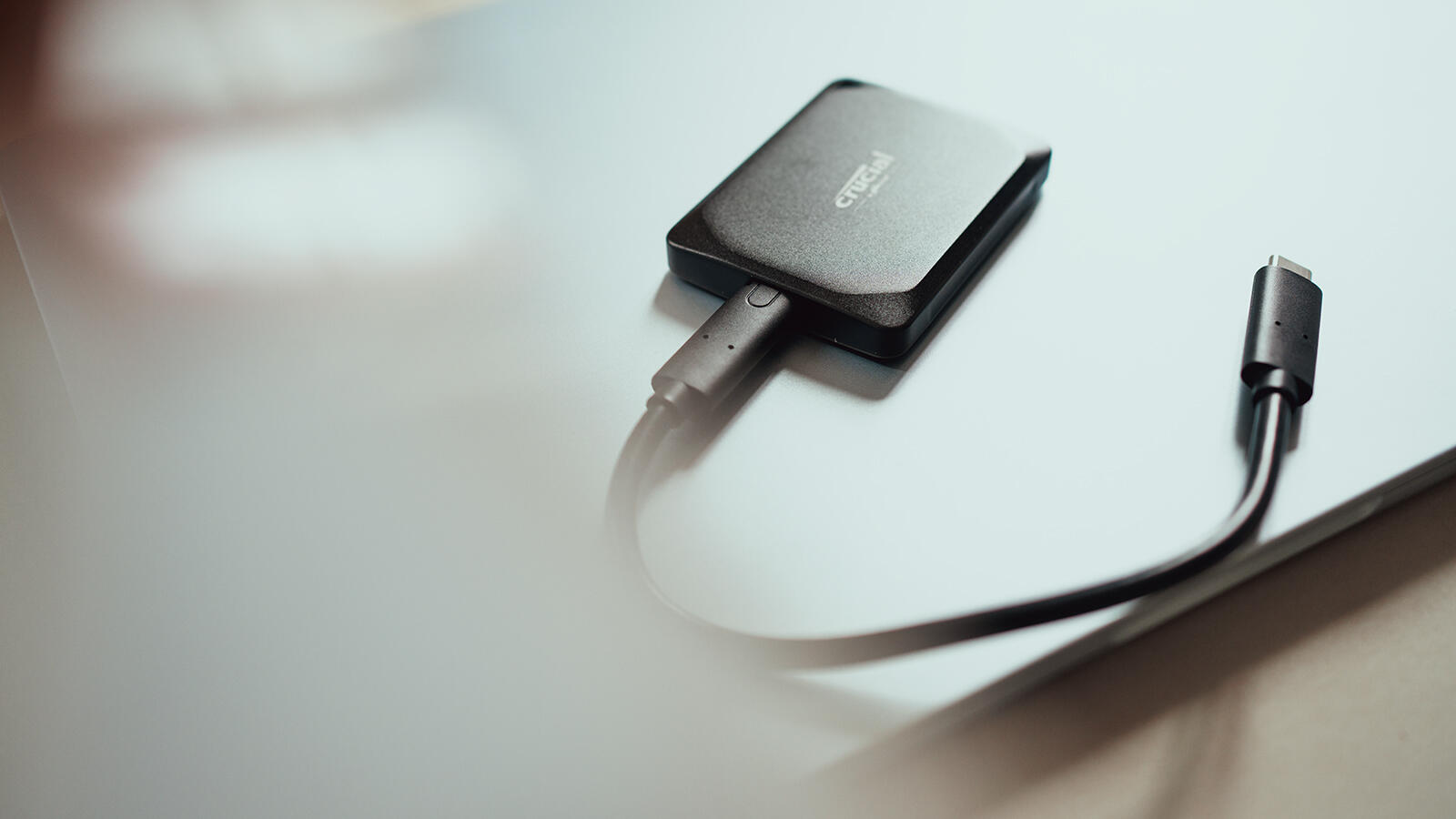
The timing was superb. Anyone shopping for a replacement right now quickly discovers that buying storage has become a discipline of its own. SSDs cost several times what they did a year ago. External hard drives are limited to one per customer in some stores, or simply not there at all.
The reason isn't retail, it's the factories. Manufacturers have shifted capacity to wherever the AI industry is paying. The big data centers buy up entire years of drive production in advance. What's left goes to the rest of the world at record prices. Analysts expect relief in 2027 at the earliest.
In practice that means: archive material belongs on external hard drives for now, and the expensive SSD stays reserved for active projects.
Back to the dead Crucial drive. It wasn't my first failure. I've had a SanDisk SSD die on me, I've had Sony Tough cards die on me, all of them devices marketed as tools for working professionals. My impression after many years: on consumer storage, "Pro" describes speed and housing. It does not describe better quality or better odds of survival.
Because in practice, SSDs rarely die of wear. Usually the electronics give up, and then all the data is gone in one stroke even though the memory itself is perfectly intact. A hard drive tends to announce its end. It gets slow, it makes noise, it throws the first read errors. An SSD does nothing of the sort. It works until, from one second to the next, it doesn't.
Anyone who considers this a fringe problem should remember 2023, when a firmware bug in several portable SanDisk models led to data loss, followed by class action lawsuits in the US. The affected units were the expensive Pro variants, naturally.
Then there's a practice that rarely gets discussed. Manufacturers swap components mid-production without changing the model name. The drive praised in a review two years ago and the unit in today's box can be different products on the inside.
The failure of my SSD was one thing. The claims process was another. Roughly 30 emails, a shipment abroad, seven weeks of processing, and somewhere in the middle the promise of an older replacement model. In the end I did at least get the purchase price refunded, which at today's prices for the same capacity is a modest consolation.
If you want to take something away from this: keep your receipts far longer than two years. The manufacturer's warranty often runs three to five years, but without a receipt and a serial number it's a pretty promise with no cash value.
I draw two conclusions. I don't bet on a single manufacturer. There is no one good brand. Every major vendor has had its bad series. If all your material sits on drives from one brand, you don't have distributed risk, you have a single one. So I mix deliberately: different manufacturers, different technologies, different production years. And I treat cards and portable SSDs as what they are, namely consumables that fail at random.
No card gets formatted before two independent copies exist. On location I back up to two separate media. The archive now lives on hard drives, not on SSDs. One copy is kept off site.
Data backups are already a lot of work. But cutting corners here would be a fatal approach.