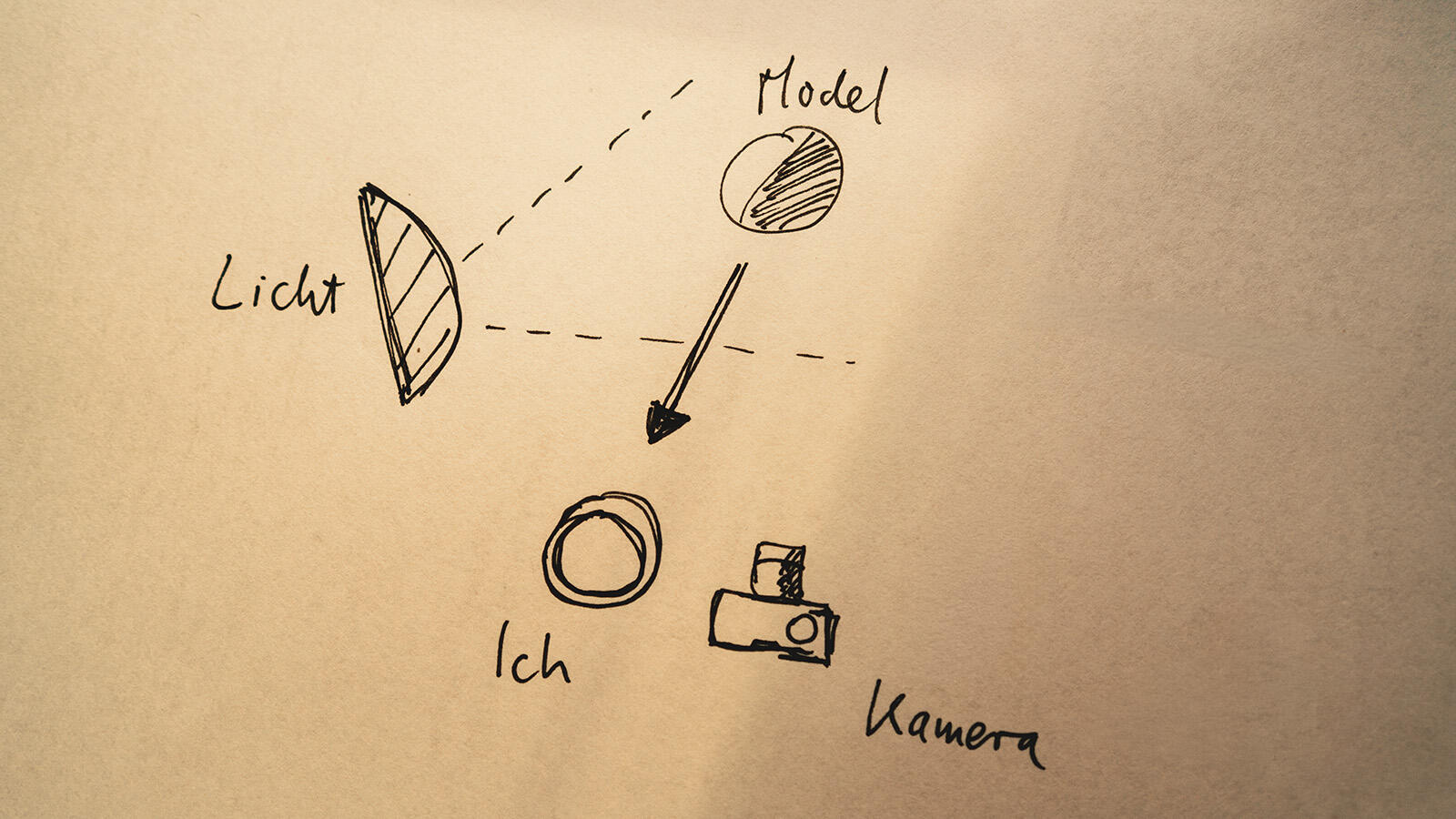
The solution is almost embarrassingly simple. A single light source, offset to the side at a 45-degree angle, slightly above eye level, aimed downward. That's it. Because window light falls the same way, it looks natural. We're used to it. I use a Zhiyun Molus G60 for this, a compact LED continuous light with stepless color temperature adjustment. Add a softbox as a modifier to keep the shadows soft.
A small lamp in the background (a bedside lamp will do) keeps everything behind the subject from drowning in darkness. Not much effort, but the difference between "meh" and "that looks good."
My interviews are short. I print out the questions beforehand, read them to the model, and later I'm neither seen nor heard in the final clip. For this to work, I ask the model to incorporate the question into her answer. Instead of just saying "Zumba and true crime," she says: "My hobbies are Zumba dancing and listening to true crime podcasts." That way the clip makes sense without my voice in it.
The model looks at me, not at the camera. I sit close to the camera, slightly off to one side. This creates a natural line of sight that gives the viewer the feeling of being present at a conversation.
One light, one camera. Nothing more needed.