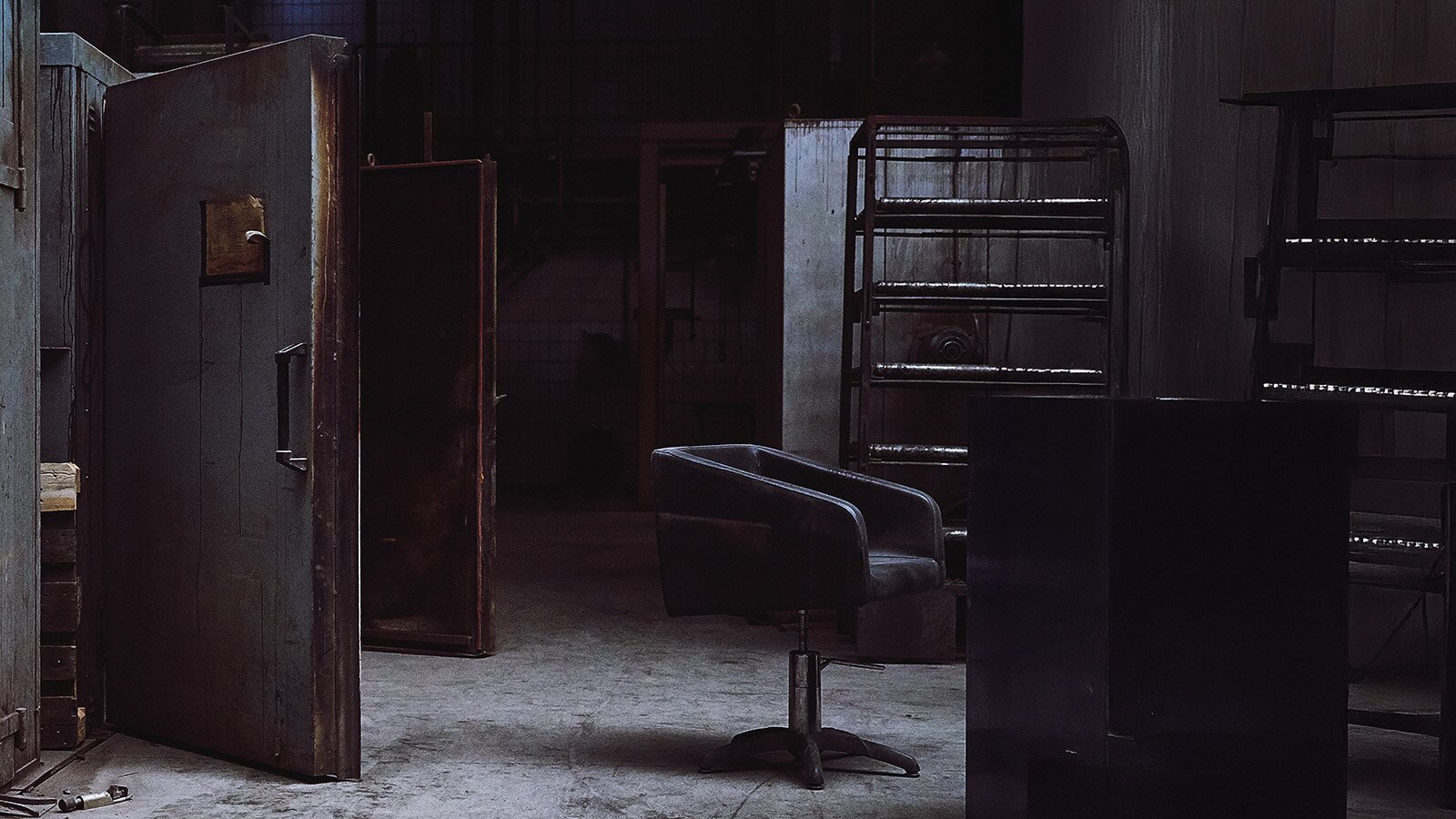
The artist had recreated the entire scene out of cardboard! I stood there with my mouth open, suddenly fascinated by every detail, feeling like someone who had considered vanilla ice cream boring for years until someone reveals that it's made from orchids.
This experience got me thinking: How do we actually analyze photographs today?
Forget the dry image analyses from art class that were as inspiring as an instruction manual for a toaster. Times have changed, and with them the way we view, share, and understand images. I'd like to introduce you to a contemporary approach that helps you dive deeper into photography — without drowning in the process.
The First Glance: What Does the Image Do to Me?
Before we dive into the details: What's your first, intuitive reaction? Does the image affect you like hot coffee on a cold morning, or more like lukewarm soup the night before a gastroscopy?
Pay attention to what catches your eye first. Which elements draw your attention? Is there something that particularly appeals to you or perhaps even bothers you?
These first impressions are valuable. They show how the image works immediately, before our analytical mind steps in with its raised index finger saying: "Now wait a minute, this needs to be viewed in an art-historical context!"
The Technical Basis: More Than Just Pixels
Let's start with the obvious. Is the image in color or black and white? A banal question, you might think — until you realize that some people immediately think of artwork when seeing black and white photos, while others just assume the photographer ran out of color.
But today we also have to ask: Is it even a "real" photograph? Could it have been created by AI? Has it been edited? In a time when every smartphone independently decides whether the sky should be bluer and whether your nose really needs to be that big, this is no longer a trivial question.
The technical aspects are the starting point of our analysis:
- Shot on film or digital?
- Where is the image presented?
- How is the composition structured?
The Genre: Context is King
A portrait is a portrait is a portrait? Not at all! That would be like claiming that an egg timer and the astronomical clock in Prague are essentially the same because both display time.
It makes an enormous difference whether we're looking at a LinkedIn profile picture (usually with that tortured "I'm professional, but also casual" smile) or a documentary photograph (the more desperate the subject, the greater the chance of winning a prize).
The genre gives us the first interpretive framework — essentially the rules by which we should "read" the image.
The Artist: When Context Opens New Doors
Sometimes a single piece of information about the artist changes our entire view of a work. Imagine you're looking at a nude photograph. You like it, thinking about composition and lighting. Then you learn: it's a self-portrait of the photographer. Suddenly you see the image with completely different eyes — roughly as if you had just learned that the chef who just served you a steak is a vegetarian himself.
You don't need to memorize artist biographies. But stay curious for such aha moments. Sometimes it's the technique used (as in my discovery of Demand's cardboard installations), sometimes the photographer's personal story ("This image was created after I spent three days in an igloo"), sometimes the larger context of a photo series ("This is image 742 of my daily self-portraits since 2003").
The Cultural Fingerprint
This is where it gets really interesting: Every photograph is a historical document. A nude photo can be protest, artwork, or entertainment — depending on when, where, and by whom it was created.
Especially in social media, this context is often lost. A photo gets shared without source attribution, without temporal classification, without cultural reference. It's like telling a friend a joke but without the punchline — and then wondering why they're not laughing.
The Presentation: Size and Time Change Everything
The way an image is presented fundamentally changes our perception. An oversized portrait on a building wall makes us feel like dwarfs — we have to look up at the face, feel smaller, perhaps even intimidated. The same face on a mobile display can be swiped away with a finger if we don't like it.
On social media, we often rush past images in a matter of seconds. A photo book, on the other hand, invites us to linger — if only because it was so expensive that you feel you need to savor every minute.
Pay conscious attention to how differently you react:
- To a tiny image on a smartphone
- To a high-quality print in a photo book
- To a life-sized image in an exhibition (where you pretend to understand the deeper meaning while actually being impressed that someone can print such large pictures)
The Audience: Between Subject and Execution
A delicate but important point: We need to learn to distinguish between our reaction to the subject and our assessment of the photographic quality. Take nude photography as an example: Do we like a nude photo because we like the body depicted? Or do we admire the craftsmanship and artistic execution? This is about as difficult as deciding whether we like a dish because we're hungry or because it's actually well-cooked.
Practice this distinction consciously:
- What does the subject evoke in you?
- What is the technical quality?
- What artistic decisions did the photographer make?
The Flexible Analysis
Do you need to go through all these aspects for every photo? Of course not.
Consider these points as a toolbox from which you can pick and choose depending on the image and your interest. Sometimes a quick look at composition and technique is enough. Other times, it's worth diving deeper into the cultural context.
The most important thing is: Stay curious. Question what you see. And above all — allow yourself to be surprised. Because just like in my encounter with Thomas Demand's cardboard office, photographs can prove to be much more multi-layered than the first glance suggests.
So, next time you see an image: Pause. Look more closely. It might just be made of cardboard.