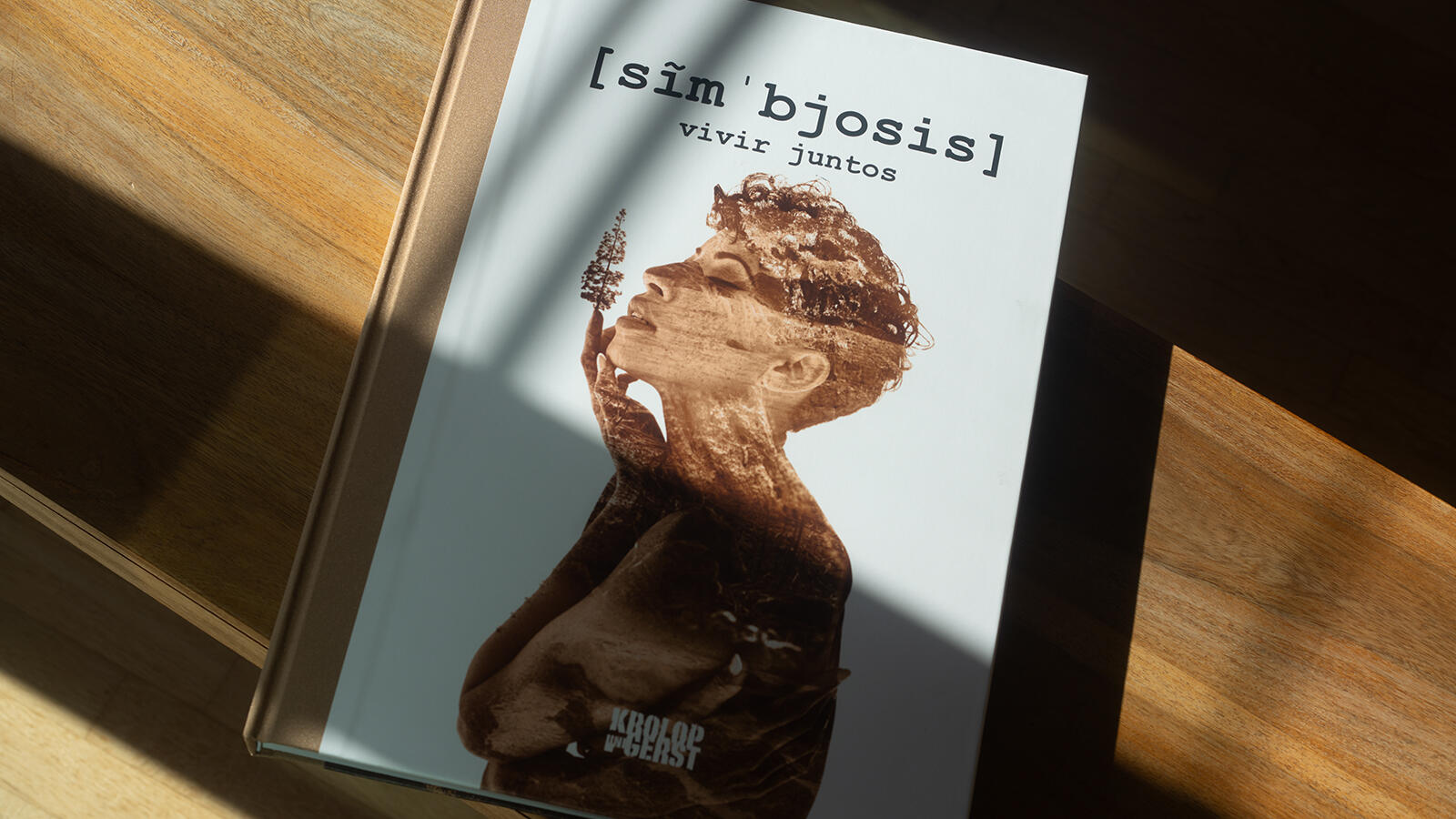
Problem number one: I hadn't ordered anything. Problem number two: the package was still sitting on the driver's hand truck, and he showed no intention of carrying it to my door. Five kilos, as it turned out. That's when it clicked. This could only be from Krolop & Gerst. Normal people don't send packages that put your spine at risk.
And sure enough. Inside the box was the latest photo book by Martin Krolop and Marc Gerst. It's called Simbjosis, the Spanish phonetic spelling of symbiosis. A book that presents landscapes and women in a delicate interplay. Quiet, epic, and full of poetry. Photography as art, not as content. No instructional guide, no lighting tutorial — just a book meant for browsing and savoring.
Though book is a bit of an understatement. As always with Krolop & Gerst, this thing is massive. 30 by 40 centimeters, 296 pages. It's not a photo book, it's a piece of furniture. Large-format photographs, a layout that gives every image room to breathe, and a production quality you can feel the moment you pick it up. Or rather, when you set it down on your coffee table and hope it holds.
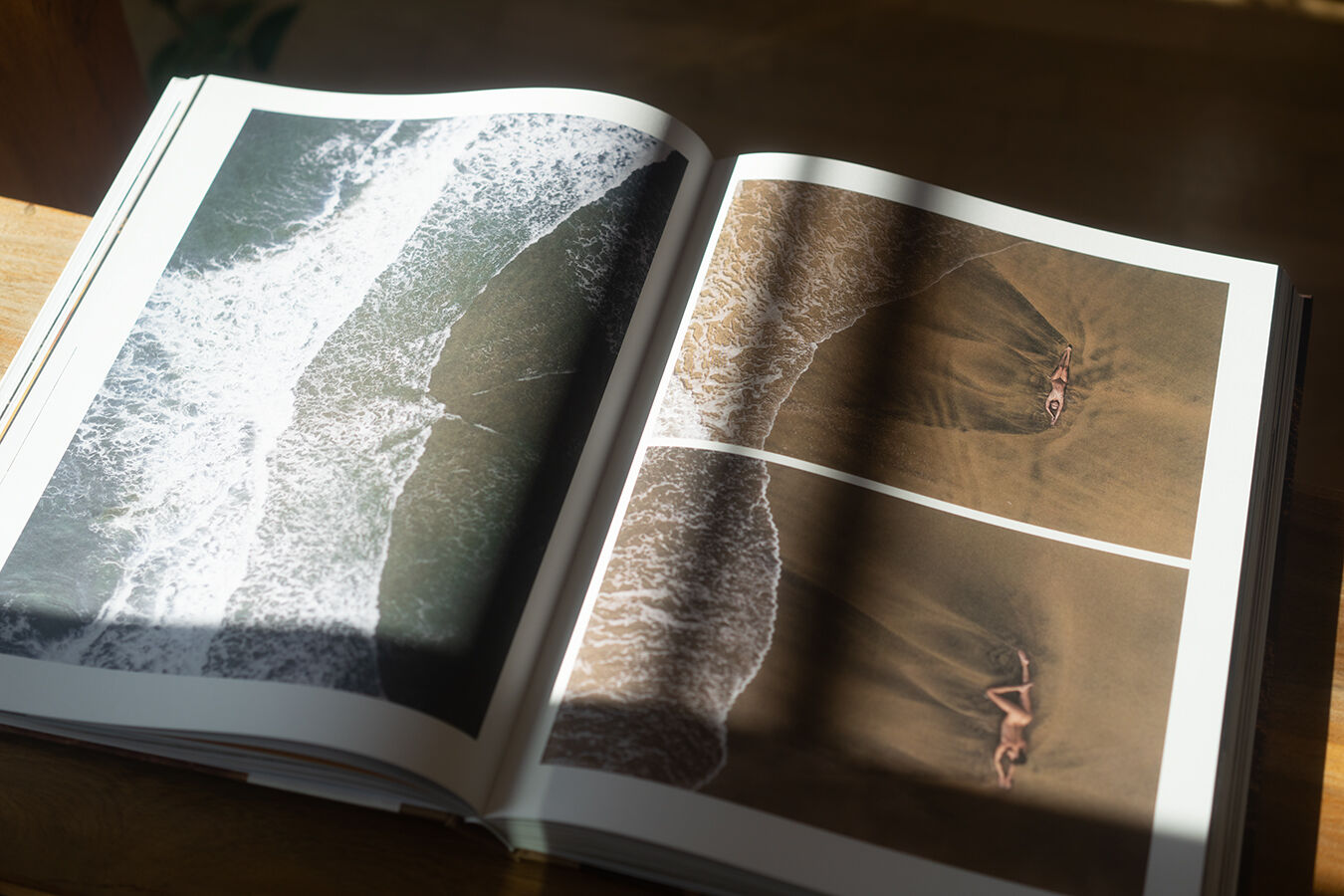
Simbjosis captures the poetic unity of the female body and the Canarian landscape, a visual interplay where nature and the human form merge into something inseparable.
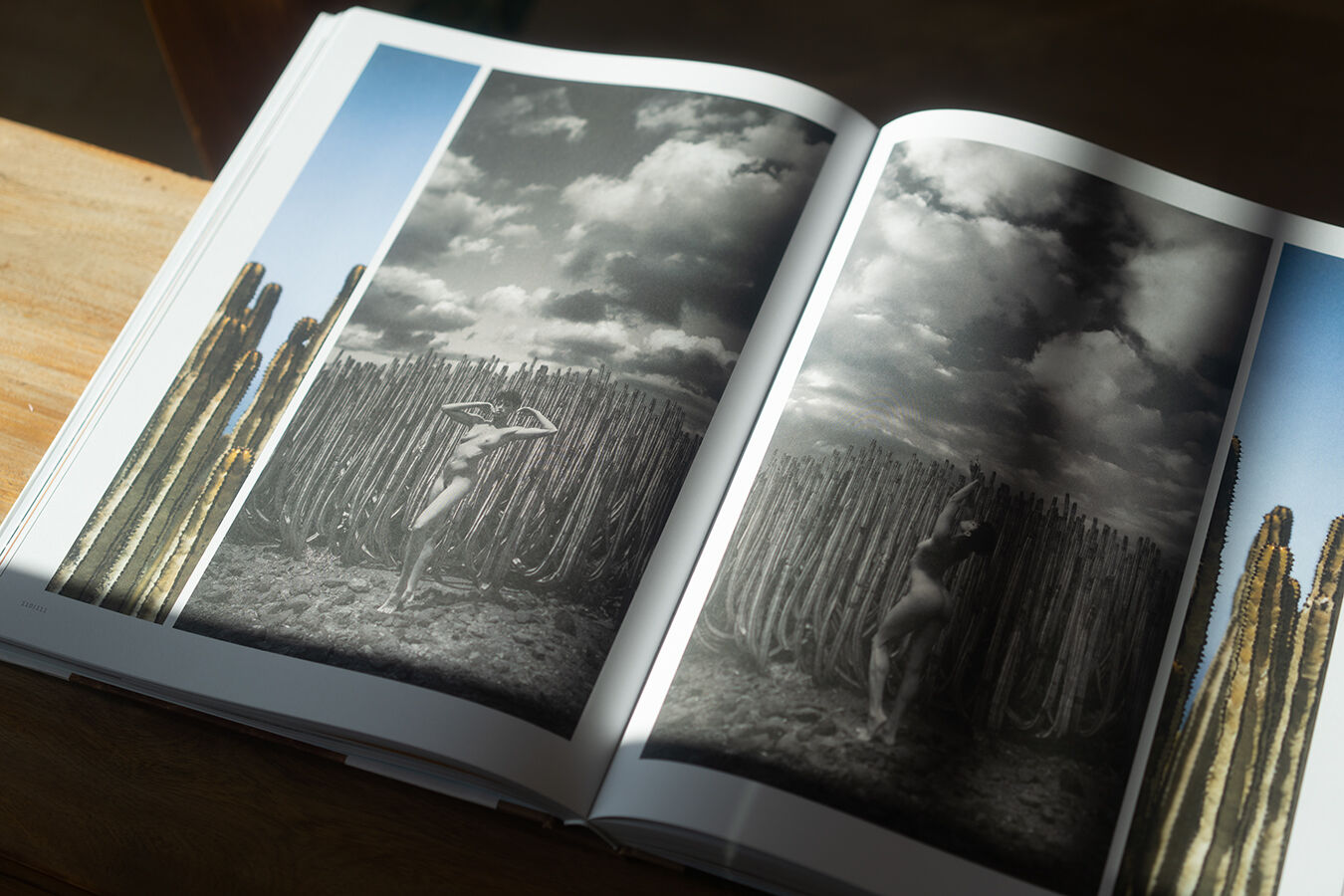
And what can I say? The format alone is impressive. You open this book and feel small. Not in a bad way, but because the images carry a force that would simply be lost in a standard book format. The black-and-white shots in particular have a power that caught me off guard. Stripped back, raw, almost graphic. Then there are the nature photographs, showing Tenerife the way you rarely see it. Not as a holiday backdrop, but as something primordial. The layout is expertly done, giving the images space without overwhelming you. Some motifs are split and combined with other photographs, a kind of diptych, if you will. Inspiring.
Is this a book for everyone? Probably not. If you're expecting a classic nude photography book, you'll find something different here. Simbjosis is slower, more contemplative, more focused on the landscape than on the bodies.
Krolop & Gerst place a clear emphasis on nature itself. The images reflect the sheer magnitude of Tenerife. Rock, water, sand. Remarkable forests. Drone shots, sunset images, and locations with jaw-dropping cacti that I've never come across in all my years there. This book is the product of years of work and countless trips. The result slows you down. You turn the pages, you look, you turn back. That's exactly how it should be.
And then there's a story behind this book that sets it apart from any other.
After printing, one of the models decided she no longer wanted to appear nude. Let that sink in for a moment. The book is printed. Done. Bound. Five kilos heavy. I think most of us would have gone into shock at that point, followed by quiet whimpering.
Martin Krolop, however, found a solution I can only describe as admirable. Using sandpaper, his team removed every affected image and replaced them with fine art prints of other nude photographs. These were pasted in with special adhesive strips, some with a sand-like texture. Every single copy. By hand.
What this means is that every book is a genuine one-of-a-kind. What started as a nightmare became a distinctive feature that, in my view, actually elevates the book. The pasted-in fine art prints don't just blend in seamlessly; they give the whole thing a handcrafted, artistic quality that transcends a conventional photo book. I tip my hat. Truly. Turning a situation that dire into something positive deserves enormous respect.
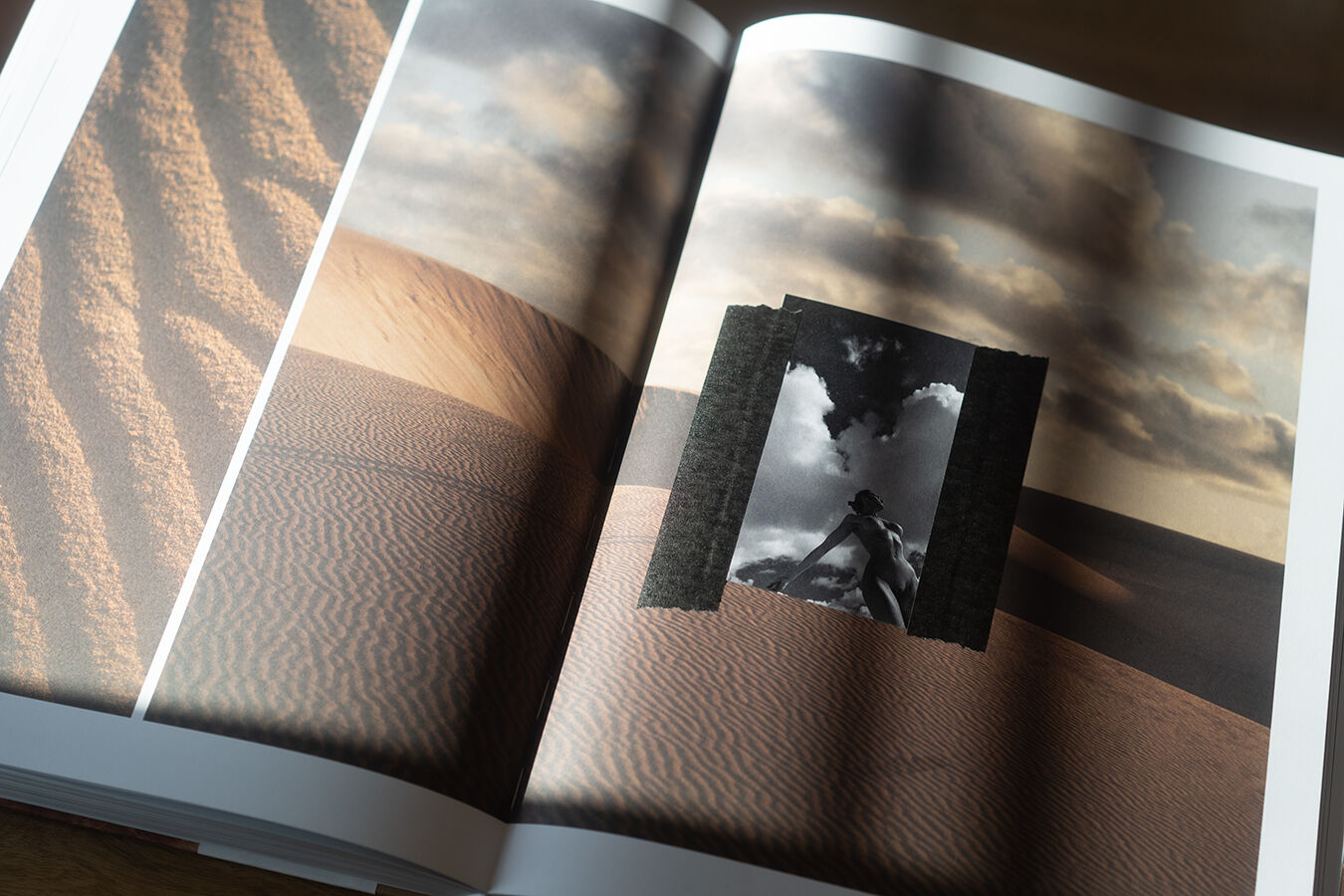
And perhaps, when you think about it, this story is a perfect fit for a book that celebrates the poetic unity of humans and nature. That in the end, it's not perfection that matters, but what you make of the unexpected. Isn't that, after all, what we try to do every day in front of the camera?
You can purchase the book here for €200:
Transparency
Krolop & Gerst sent me this book as a gift. I'm writing about it because I believe in colleagues supporting each other. Drawing attention to each other's work. In this industry, we're not competitors — we form a symbiosis of our own. A shared fight against the disposable, and for art.