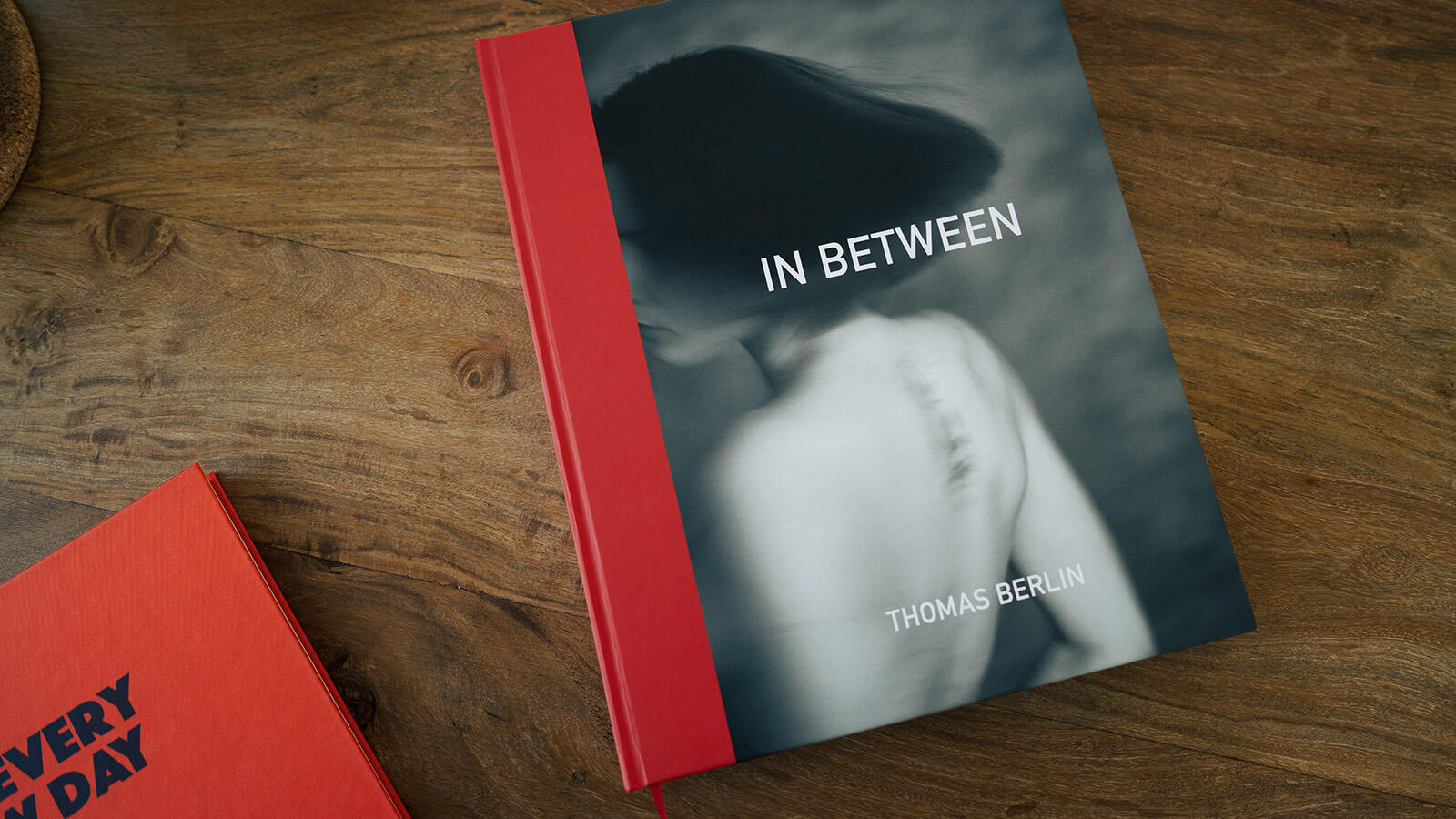
Just over a year after his debut photo book On Every New Day, In Between is now sitting in front of me. Bigger, heavier, more confident. 256 pages of hardcover, 24 by 30 centimeters, with a ribbon bookmark. While what feels like half the industry is shrinking their photo books down to A5, Thomas went the other direction. Great photographs deserve a format that does them justice. Sometimes it really is that simple.
What makes this book special is the print run: 150 copies. Not as a marketing gimmick, but as a deliberate choice. Digital printing makes it possible, having long since caught up with offset in quality. Strong paper, clean reproduction. Thomas, himself the owner of a considerable photo book collection including a few rarities that have long disappeared from the market, understands the value of scarcity. You hold a book that exists only 150 times differently than one that sits on every shelf.
36 subjects appear in In Between. The images aren't organized by model; this isn't a best-of collection (Thomas practically wrinkles his nose at the term), but a composition built around mood. Visually harmonious image pairs alternate with contrasting spreads, interrupted by quiet moments that let you breathe. In between, floral still lifes, flowers as a subtle commentary on transience. And then, as a resting place for the eye: black pages with Polaroids at original size. A smart decision for a book of this length.
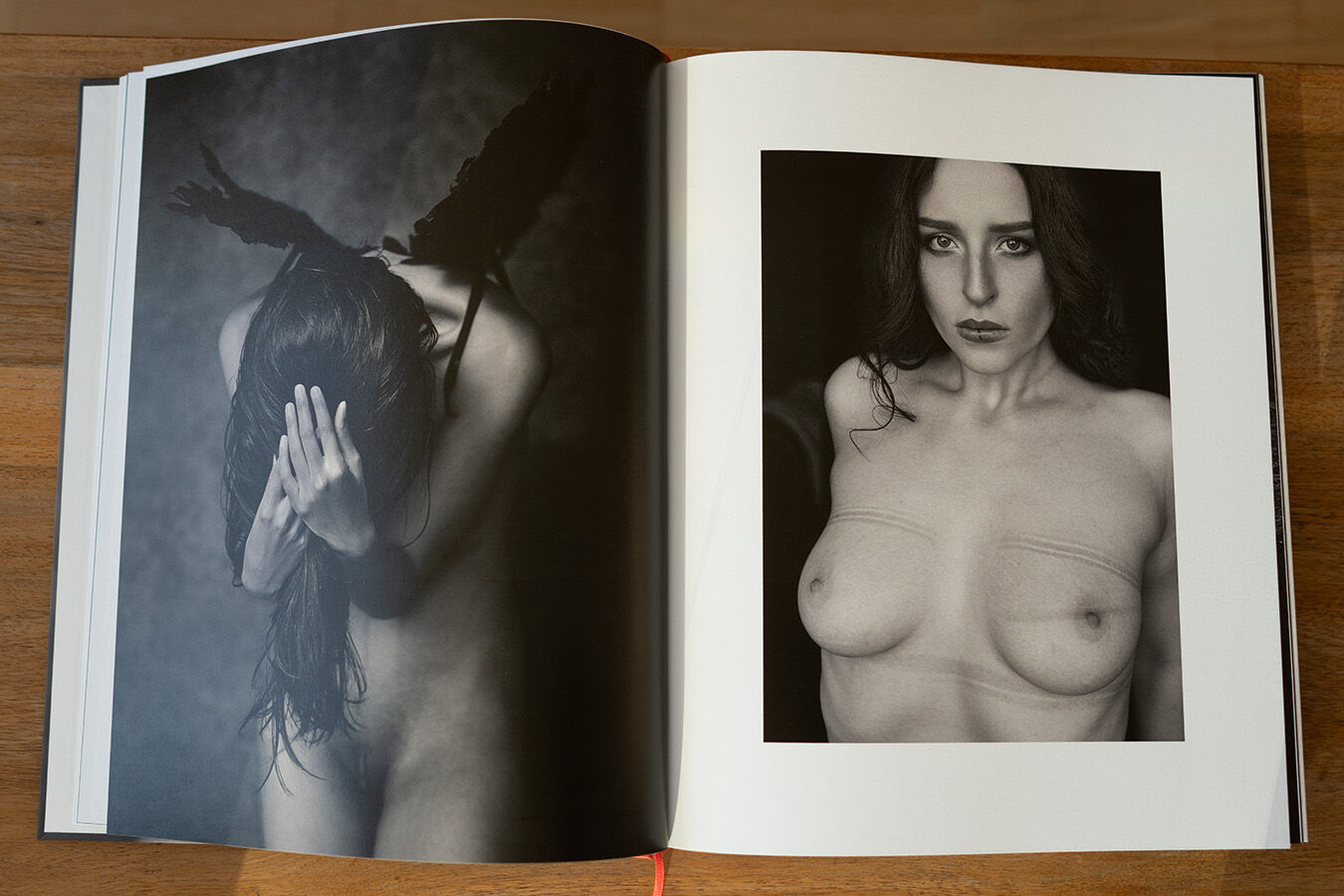
What does "In Between" mean? It's a liminal space, Thomas explains, in the broadest sense. Time, mood, subject. His shoots begin staged and gradually drift into something less controlled, more authentic. That transition is exactly what the book captures.
The mix of black-and-white and color is roughly half and half. Black-and-white when form and expression are stronger than what color could evoke. Color when it carries the mood better. Thomas sometimes shoots in monochrome from the start because he knows that character reads more powerfully in black-and-white, while atmosphere thrives in color. Over the years, he says, he's loosened up. Become more willing to experiment. He deliberately over- or underexposes, intentionally builds small imperfections into his images so nothing feels sterile. In certain Asian temples, he tells me, one pillar is deliberately set slightly off-true to show that perfection is inhuman. It's one of his quirks. Barely visible, but there.
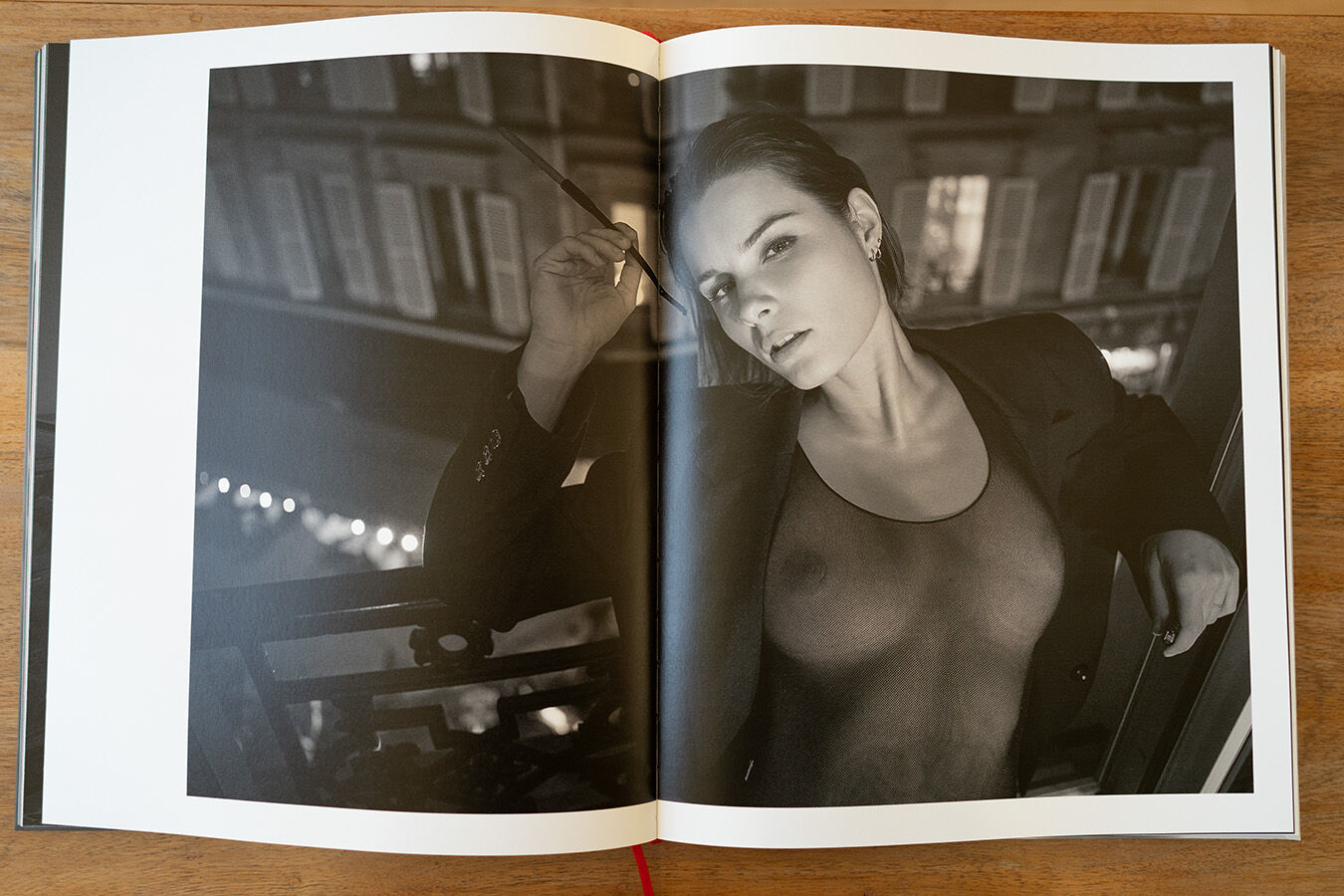
What sets In Between apart as a photo book, for me: Thomas doesn't separate clothed from unclothed images. Nudity isn't a sorting criterion. There are no sexualized poses, not because sexuality is something negative, but because it isn't the subject of this book. A person's dignity doesn't depend on clothing but on how respectfully they were portrayed. That sounds simple. It isn't.
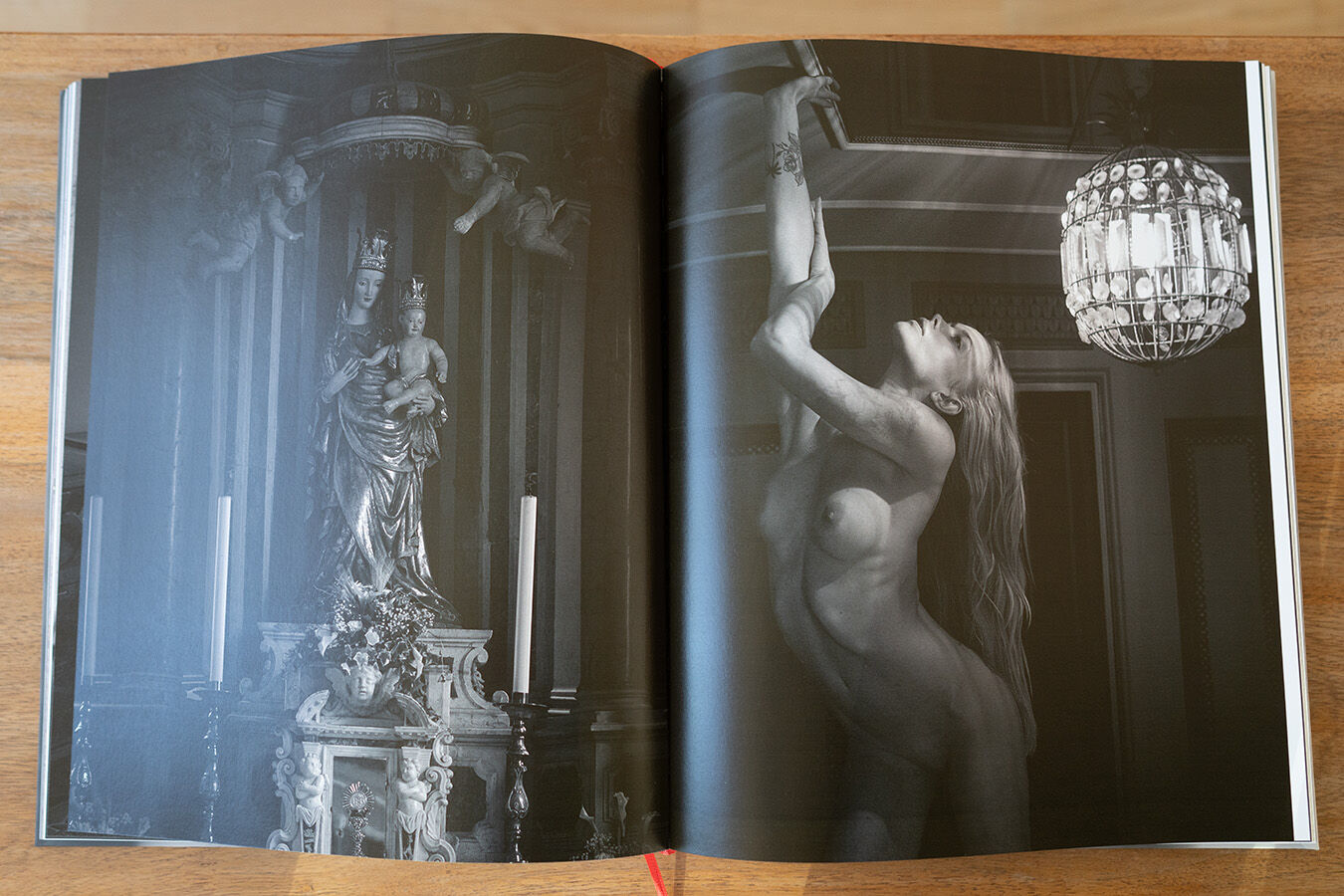
Thomas could have done the book with a publisher. The only advantage, he says with a dry smile, would have been not having to go to the DHL parcel station in the evening. In the end, the idea of freedom won out. No rules, no justification, full control over design and execution. 150 copies give you that freedom.
I had actually planned to spend 90 minutes talking to Thomas about the book. It turned into over three hours. Thomas is someone deeply rooted in the photography scene, who knows past and contemporary artists and thrives on exchange. You lose track of time talking to him. The red ribbon bookmark in In Between isn't accidental, by the way. Thomas wants you to pick the book up again. To leaf through it, discover things, leaf back. His images are unpredictable; you never know what's coming on the next page. Through the curation process, he realized that he doesn't just have one style but works with real variety.
A good photo book should be allowed to sink in, and you should try to look behind the images.
That's what Thomas says. What I say is: 150 copies aren't many. Seize the moment: