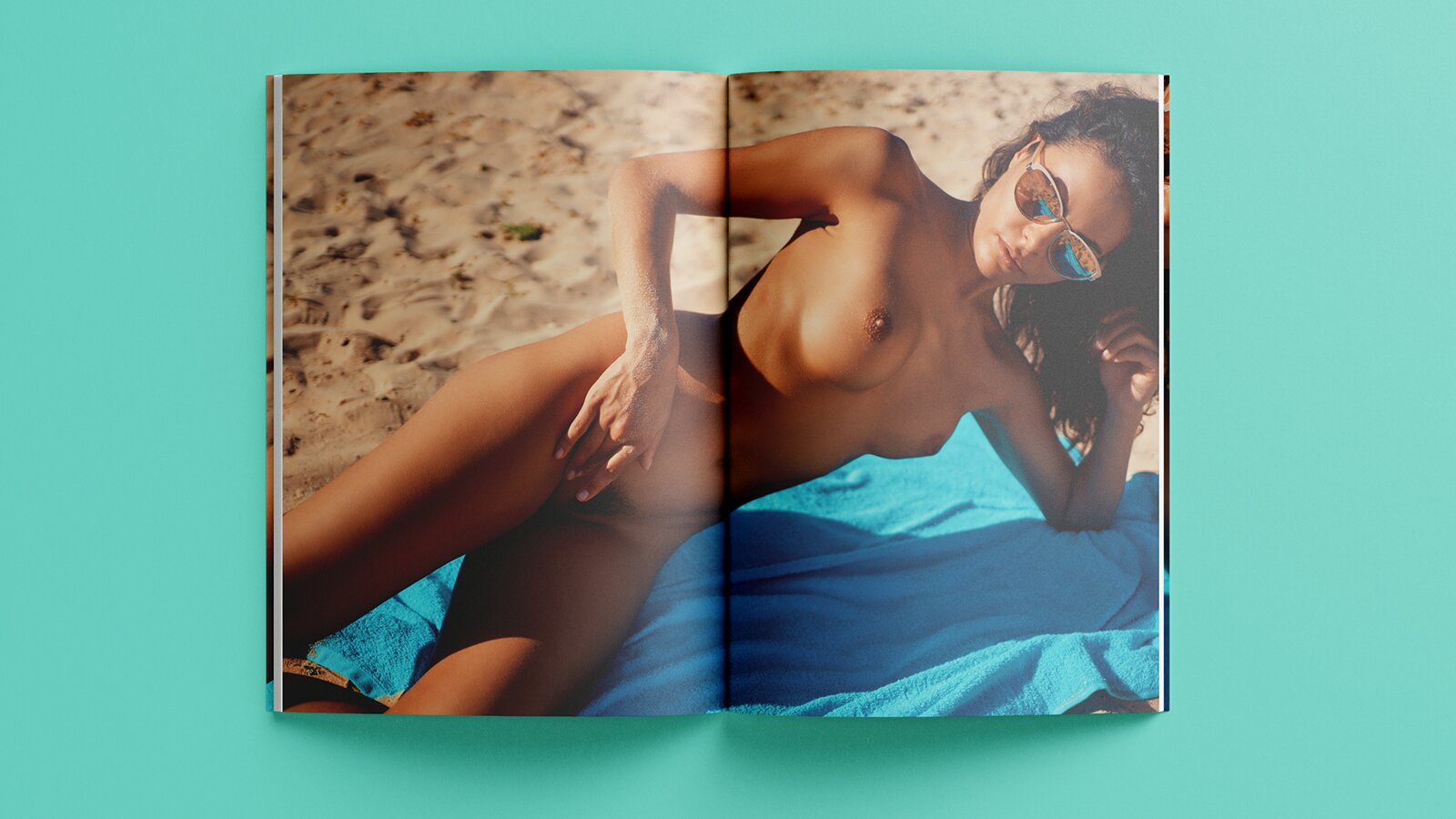
You see, my Sony is actually a small marvel of adaptability. It offers me 2:3, 3:4, 1:1, and for the video enthusiasts among us, even 16:9. An impressive arsenal of possibilities, one might think. But ironically, the formats that become relevant later for print are nowhere to be found.
A brief chat between camera manufacturers and publishers probably would have worked wonders here. But no, that would have been too easy.
Let me briefly take you into the world of German thoroughness: The DIN A4 format, these precise 210 × 297 millimeters, actually has an almost philosophical origin story. In 1922, a certain Dr. Walter Porstmann had quite an ingenious idea. He wanted to develop a paper format that maintains its aspect ratio when halved. The result? The famous square root of 2 ratio (1:√2).
The origin of this mathematical artwork is the A0 format with exactly one square meter of area (841 × 1189 mm). Through repeated halving along the longer side, the other formats emerge. A system that has prevailed worldwide. Well, almost. The USA and Canada don't play along. They prefer their Letter format (216 × 279 mm), which is slightly wider and less tall than our A4.
In my world as a photographer for Playboy, everything revolves around the 213 × 275 mm format. At first, this doesn't sound dramatically different from 2:3 or 3:4, but these small differences pack a punch. 3:4 still shoots taller. To be honest, this doesn't help me at all with image composition in the camera.
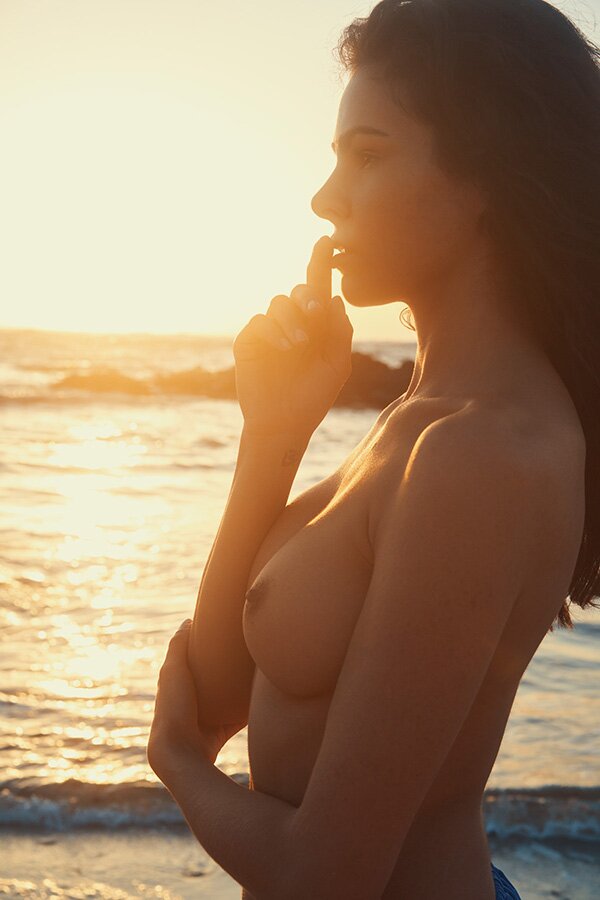
Sure, the magazine format 213 × 275 mm is perfectly designed for standard printing sheets (70 × 100 cm or 64 × 88 cm). Minimal waste, maximum efficiency. But for me, it means I have to be careful right from the start while photographing. In portrait orientation, the difference between my camera sensor's 3:2 format and the magazine format becomes particularly apparent.
It gets tricky in a different way with double-page spreads. During the shoot, you need a good sense of what important details might disappear in the fold later. And believe me, in my line of work, these details are often quite "essential". An eye disappearing in the fold is annoying. But creasing other anatomical highlights is simply unacceptable. At least the landscape format only deviates by about 3% from the 3:2 aspect ratio. This means I only need to leave a bit of breathing room when photographing.
You really don't need to explain this to me.
Admittedly, the topic is getting a bit nerdy now. When I told my wife about these format considerations, her response was clear: "You really don't need to explain this to me." Maybe she's right. But for all format enthusiasts among us, let's continue anyway.
What have we learned so far? There's an amazing variety of aspect ratios that are needed in practice. And then there are camera manufacturers who have unfortunately failed to implement these practically — whether as guide lines or directly as display crop in the viewfinder.
Because when I'm photographing, I usually know exactly what purpose I'm taking the pictures for. By the way, neither 2:3 nor 3:4 worked for my photo books either. So, dear camera manufacturers, hello Sony, why can't I simply set the aspect ratio myself?
Recently, I had an interesting thought while looking at my calendar in DIN A3 format. What makes Dr. Porstmann's invention so special: The aspect ratio remains constant, whether in portrait or landscape orientation.
In the camera's viewfinder, a single ratio could thus be maintained, regardless of orientation. How genius would that be? This format clearly outshines the others — like that of Playboy or my photo book.
Enough theory. To help you get a feel for this format acrobatics yourself, I've built a browser-based tool below. Feel free to play with different formats and your own images. Don't worry, your data stays secure on your computer all the time.
Format Acrobatics
Select a page ratio and move around the crop (including bleed) to understand the first world problem I was talking about in this article. You can play around with your own photo below. This tool only works on desktop browsers.
Upload Custom Image
Upload an image or drag & drop it here