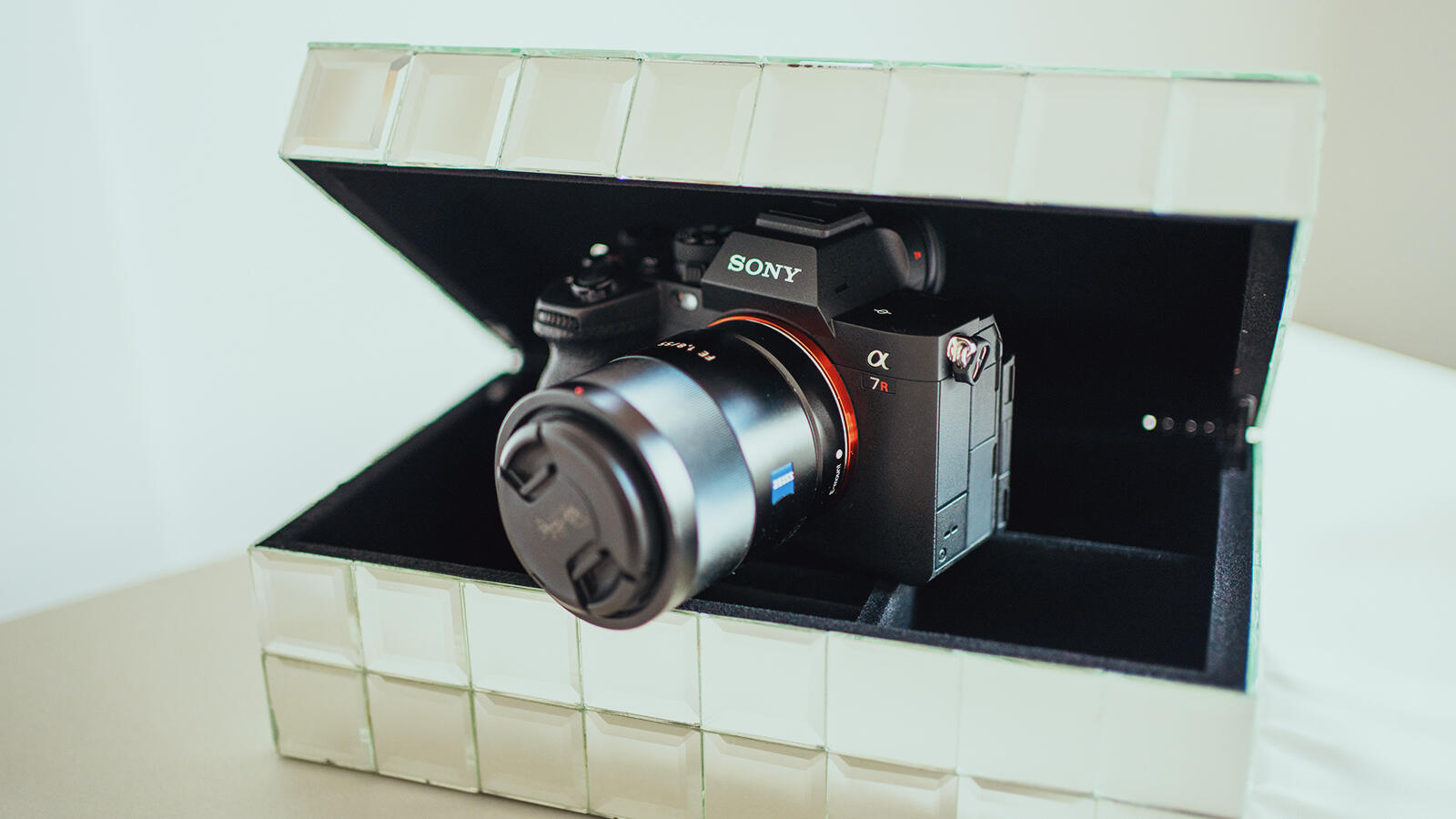
A lot has happened in camera design over the past fifteen years. Mirrorless bodies, greeted at first by the veterans of the flipping mirror with the kind of gentle smile normally reserved for people who cut their wine with water, have taken over the market. Sony, Nikon, Panasonic, Fuji, even Canon (who had a rough start) now build machines you'd have to work hard at to get a truly bad photo out of. What keeps me at Sony these days is the lens ecosystem. Without that tie I might have wandered off at some point out of sheer curiosity.
My a7R IV dates from 2019. It is, and I'm not exaggerating here, the best camera I've ever owned. Better than the Phase One I sold about ten years ago at a loss best described as educational. I didn't shed a tear over it. The Sony simply does what I ask of it, reliably, without drama, without the quirks expensive tools sometimes develop once they sense you depend on them.
The reason for the purchase is unromantic. Weeks-long productions on small islands also mean this: if the main camera dies, I have to be able to keep working that same minute. So there's always a second body in the backpack. Until now that was my a7R II from 2015, a loyal piece of equipment that had a hand in a good portion of Sublime.
By now, though, the R II has reached an age where you'd rather not ask it to handle every job. I could have simply bought a new backup. Instead, everyone moves up a rung, the way they would in a very small family business: the R II retires, the R IV takes over backup duty, and the R V moves to the front.
Right in the middle of these deliberations came the announcement of the a7R VI. Stacked sensor, thirty frames per second, 8K video, 67 megapixels. An impressive machine, truly. Only, what would I do with thirty frames per second? I don't photograph show jumpers, Formula 1 cars, or startled flocks of birds. I don't need more megapixels either, since all they mean is more memory cards, longer transfers, and even more backup drives.
Price is a chapter of its own. The R VI is surely worth it, I don't doubt that for a second. But when the R IV is still good enough after seven years that I can't come up with a serious argument for upgrading, that says less about my modesty than about where things stand: technology stopped getting in the way of creativity quite some time ago. In the early days of digital photography that was a different story. Cameras have matured.
Fortunately, I don't suffer from Gear Acquisition Syndrome. I buy when there's a reason, not when there's something new. This time there was a reason: a tired backup camera, a solid compatibility argument, and maybe the R V's even better autofocus.
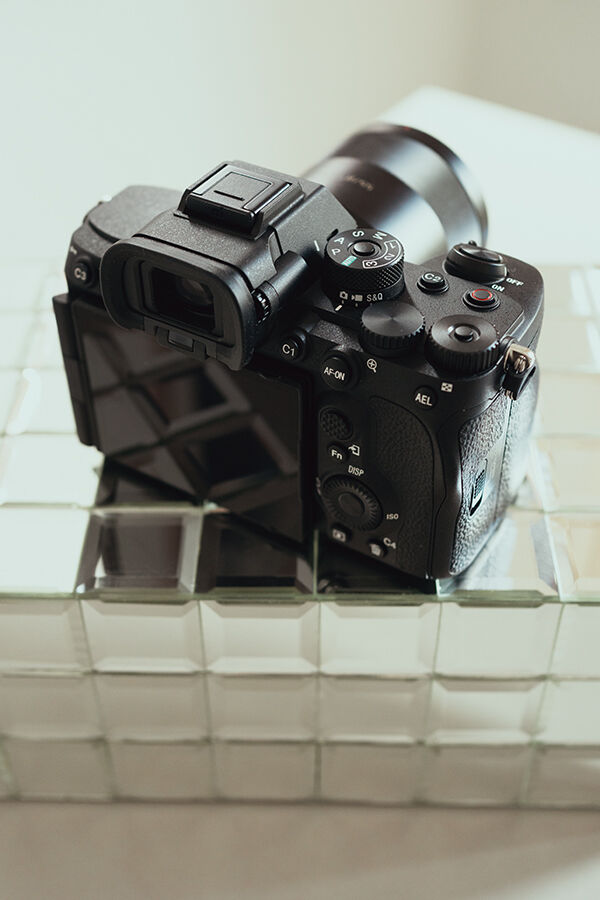
So there it sits, my new Five. It hardly feels different from the R IV, which I mean as a compliment. The eyecup wobbles a little and the flip-out screen has gotten noticeably thicker. The files are also, to my surprise, a few megabytes larger, even though the sensor is the same. The menu really is better organized, though still extensive enough that it took me several days to work my way through it.
And then the memory cards. The R V rejects my Sony Tough cards outright. These are the cards from the defective batch that made the rounds in Germany back then, heavily promoted by the same company that built the camera. The exchange came to nothing at the time because support simply left me hanging. In the R IV they run without a care in the world; the R V refuses them. At least Sony has spared me a purchasing decision: Sony Tough memory cards are permanently off the table for me. I use SanDisk, Lexar, and Kingston instead.
From here on, the Five gets to prove itself in daily use. The autofocus has taken another clear step forward and the improved IBIS makes me really curious, too. I'm looking forward to the next few years with my new workhorse.