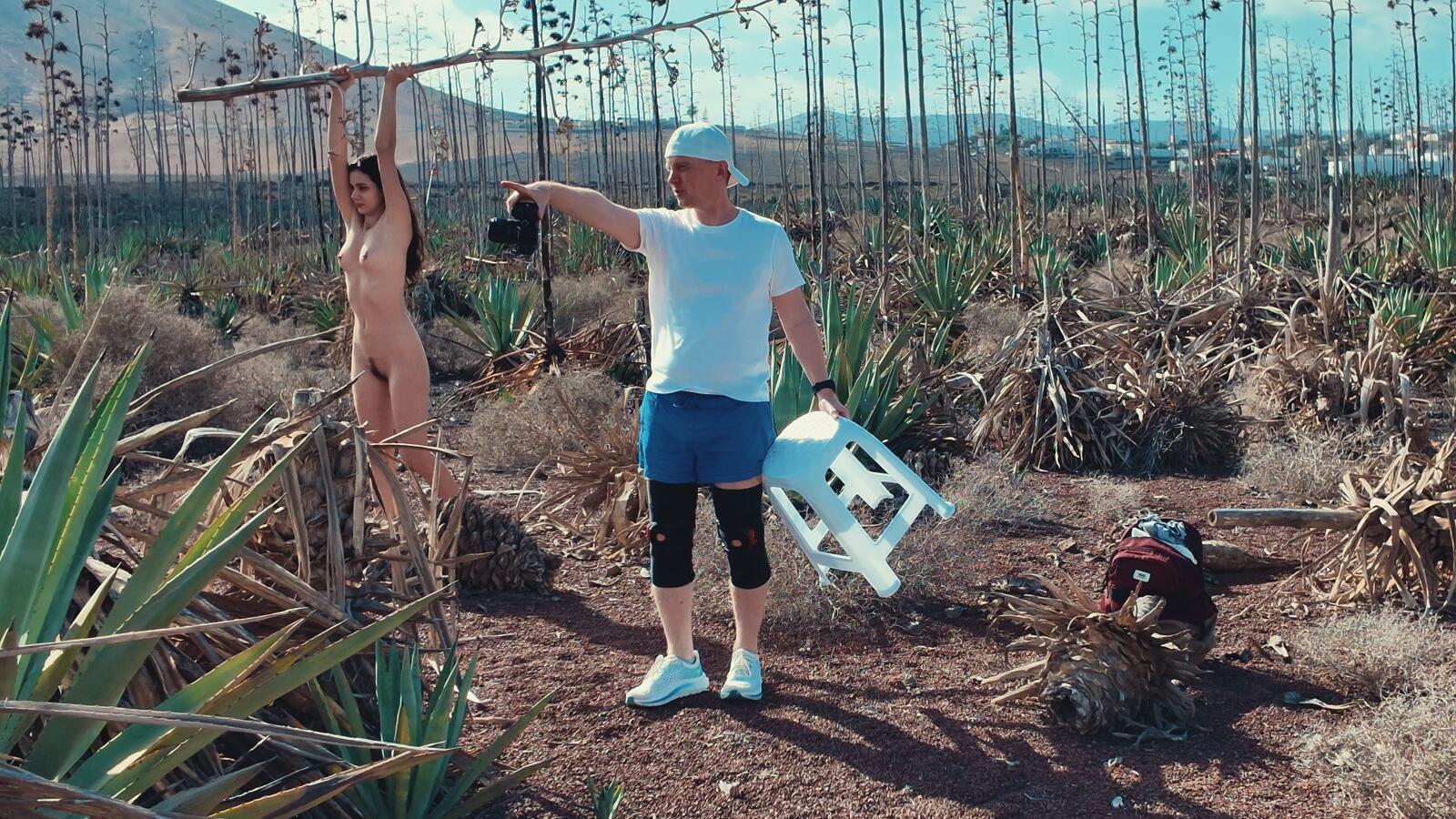
Professional athletes have known this for ages. Triathletes get filmed underwater to optimize their swimming technique. Football teams meticulously analyze their plays after every match. Why should it be any different for photographers? I always thought I knew how I work. Focused, concentrated, professional. What I didn't know: I look like someone who's just been handed their in-laws' tax returns to sort out.
When I'm shooting, I'm in the zone, completely in the moment, fully immersed. But does that mean I have to look so serious, as if someone just told me the world will end in three hours? Doesn't that intimidate the model?
The situation is more complicated than it first appears. There's a model standing in front of me, possibly freezing in the wind, and I don't want to keep her standing there naked any longer than necessary. She's performing, doing her job well, probably thinking everything's going smoothly. But I'm still wrestling with the composition, unsatisfied with the light, the angle's not quite right. At the same time, I don't want to interrupt her flow, don't want to stop what's working. So I'm fighting an internal battle with myself.
Then there's a practical problem: I like shooting into the light. The sun blinds me. I talk to the model, then look through the viewfinder again and see absolutely nothing at first because it's so bright. I squint, try to orient myself, but I also don't want to constantly hide behind the viewfinder.
Sunglasses would obviously be a solution, but unfortunately I lack the coolness of a Kristian Schuller. He can photograph with dark glasses and look like a rock star doing it. I'd probably never get another shot in focus. So I prefer to skip the dark lenses.
Besides, I'm not in flirt mode at all. That's a good thing, right? I'm exclusively focused on making good images. That's what I'm laser-focused on, what I'm concentrating on one hundred percent. And I never want to give less than a hundred percent, regardless of who's in front of the camera, whether it's a small job or an important publication. I don't make distinctions.
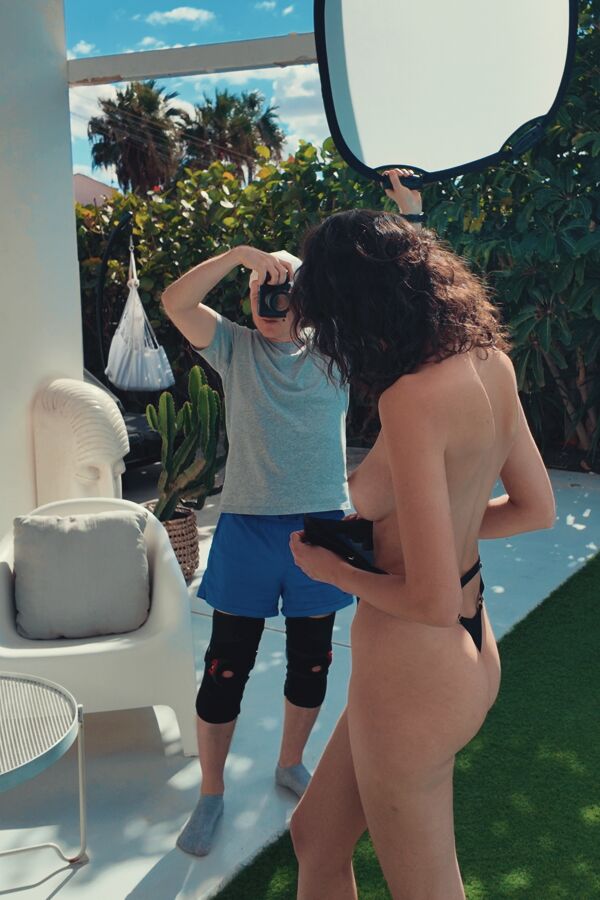
Sometimes communication isn't made any easier by two non-native speakers trying to harmonize in English. Although I have to admit that even in German I struggle with giving posing directions. "Bend your right leg more, no, uh, the left one, wait, no, your right or my right?" You probably know the feeling.
What was good about the video analysis for me: it shows me something I don't perceive myself. I feel concentrated and professional, but I possibly come across as tense and humorless. The model only sees my face, not my internal processes. And if I look like someone studying a vacuum cleaner manual, that probably rubs off on the person across from me.
So I'll do my part. At the next shoot, or maybe the one after that (you have to be realistic), I'll try to be more relaxed. Smile a bit more. Maybe even laugh. It's not just the model who needs to come across well in front of the camera, but me behind it too.