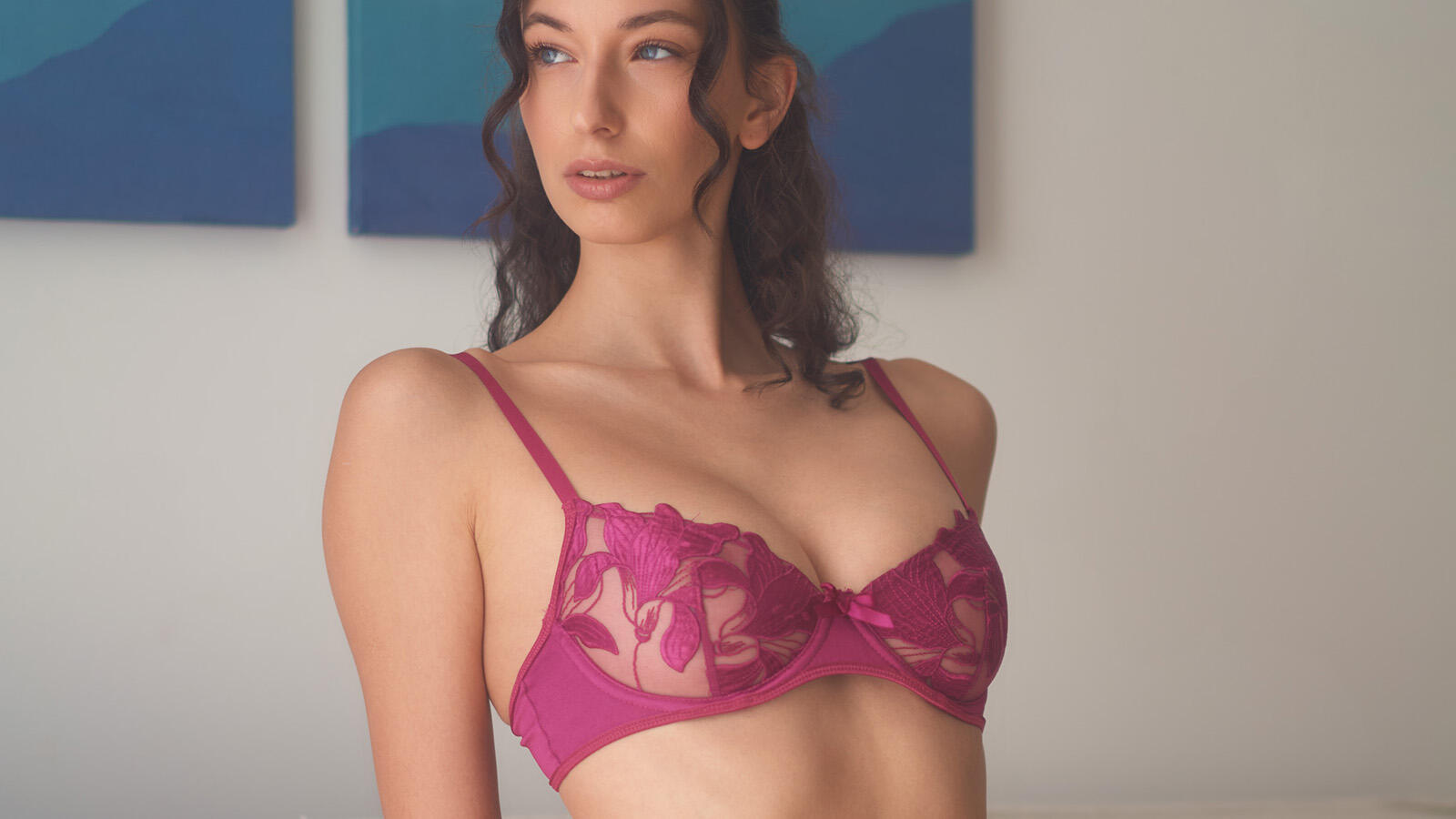
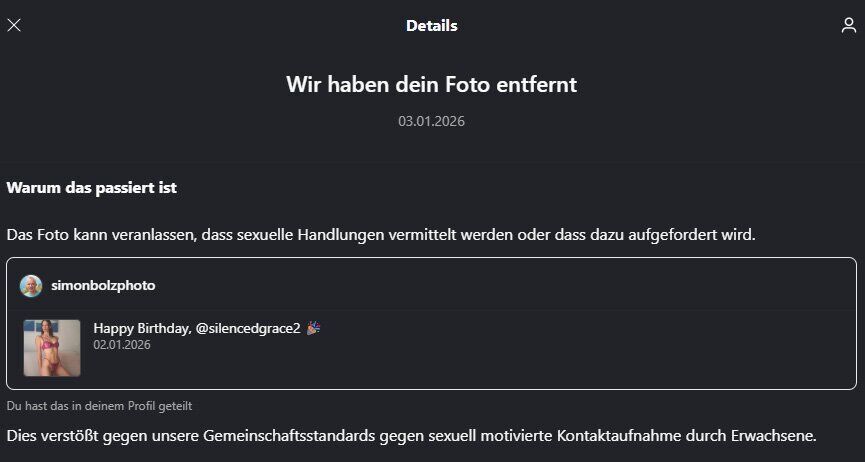
Fifteen hours later, the post is gone. With a reason that's quite something:
This photo may facilitate or encourage sexual acts.
I read this sentence three times because I think I must have missed something. But no, it actually says that my birthday greeting to a professional model constitutes an incitement to sexual acts. What acts, exactly? With whom? And above all: How does an algorithm (or a hysterical content moderator in Manila) come up with this idea?

During my recent productions, I made a special effort to include clothed shots. Not because I find them artistically more interesting, but because I thought: If I have to be on these platforms anyway, I'll just produce material that complies with the mysterious community guidelines. The fact that a nude photographer also takes photos in underwear sounds ridiculous at first, but that's the reality in 2026. You adapt. You play nice. You hope.
What's perverse about this isn't just the arbitrariness, but also the hypocrisy. At the same time, Instagram is running advertising campaigns for lingerie manufacturers showing significantly more skin. Models lounge in thongs on king-size beds, gazing seductively into the camera, and nobody deletes that. Why? Because it's paid advertising. Because money is flowing. My birthday greeting, on the other hand, is free content, so fair game for any algorithm that feels like flexing its muscles.
After my post disappeared, I wrote briefly about it in my story. Nothing dramatic, just one sentence. Within hours, I received over fifteen messages. From photographers, models, other creatives. All with the same statement: Yes, we know. Yes, happened to us too. Yes, that's why we hardly post anything anymore. And then the postscript that annoys me most: But everyone's on Instagram, so we stay.
This resignation makes me angrier than the censorship itself.
We're talking about a fundamental right here. Freedom of expression. An enshrined human right. But because a private corporation has decided that a photo of a woman in underwear "may facilitate sexual acts," it gets deleted. And because this corporation has a de facto monopoly on visual communication on the internet, we swallow it. We get briefly annoyed, maybe write an indignant message to support (which never gets answered), and then carry on as before.
I barely post anything on Facebook and Instagram anymore. That's my personal response to this development. But at the same time, I know it's not a solution, just an individual capitulation. Because as long as nobody speaks up, as long as these incidents aren't documented, nothing will change. The algorithms won't become more transparent, the guidelines won't become more comprehensible, and the arbitrariness won't decrease.
That's why I'm writing this text. Not because I believe something will change tomorrow. But because silence means acceptance. And I don't accept this. A birthday greeting is not a sex crime. A photo in underwear is not pornography. And a corporation that equates the two has a problem with its own morality, not with my images.
What additionally troubles me: While Meta desperately tries to regulate the female body (unless it generates ad revenue), total disinhibition rages on other platforms. On X, people are currently using the in-house AI Grok to digitally coat women in "Donut Glaze" or "Baby Oil," which makes them look like they've been ejaculated on. Strange trends that show we're moving somewhere between Victorian prudishness and digital degeneration without finding a middle ground.
But unfortunately, my birthday greeting was not an isolated case.